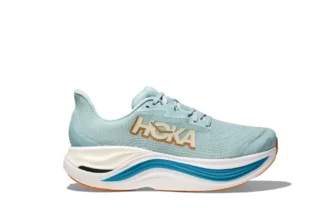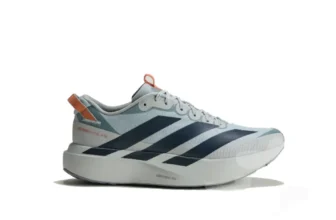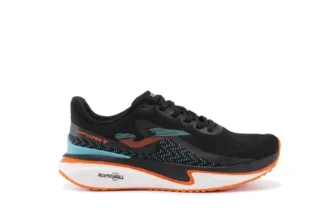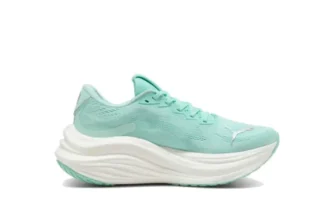
The 1080 v15 is basically New Balance saying: “Okay, let’s start over and do this properly.” It feels like a full reboot of what the 1080 is supposed to be in 2026: a max-cushioned daily trainer that still gives you that cozy, plush rid but without feeling old-school or flat.
The big change is the midsole. New Balance have ditched the old Fresh Foam and thrown in this new Infinion foam, which is softer, bouncier and made to feel good not just on day one, but on run number 100 as well. Thia is the whole story: comfort that stays fun instead of comfort that turns into a sleepy marshmallow.
First impression
When you put the New Balance 1080 v15 on, the first thing you notice is that soft, plush feel everywhere: under the foot, around the tongue and on the upper.
That sums up the step-in experience better than any technical breakdown. The 1080 v15 doesn’t just feel cushioned; it feels pampered. You don’t need to “break it in” to get the point. It’s soft in all the places that usually irritate us on longer runs: tongue pressure, collar rub and that annoying edge at the front of the ankle. It’s like a friendly shoe.
And that comfort isn’t just for the first 10 minutes. This is the kind of trainer that makes you want to go longer because it removes friction from the experience.
Midsole
The 1080 series has always lived in that “plush” lane, but older versions sometimes leaned too far into “soft = dead.” You’d get protection, but not much feedback. The v15 fixes that.
It’s still a classic cushioned daily trainer, but now it feels a lot more modern and lively underfoot.
What makes it work is the balance. The foam is clearly softer, but it’s not collapsing under you the moment you land. It compresses, rebounds, and gives you a smooth forward roll.
And the big win is exactly what you called out: it’s made to feel good not just on day one, but on run number 100 as well. That’s what we actually want from a daily trainer: not a shoe that feels amazing fresh out of the box and then turns dull after a month, but something that stays consistent while we stack mileage.
Cushioning
The cushioning is seriously generous, with a high stack around 40/34 mm and about a 6 mm drop, so it’s great for easy runs and long runs when you just want comfort and a smooth roll.
This shoe is built for “boring” miles in the best way. Recovery days, steady base building, long runs where you’re protecting the legs, and those sessions where you don’t want to think about your shoes at all.
The ride is smooth, and it encourages a relaxed cadence. It doesn’t demand anything from you. It doesn’t punish heel striking. It doesn’t feel harsh on forefoot landings. It just stays comfortable.
The nice part is that the new foam doesn’t feel dead; it actually has a bit of rebound, so if you pick up the pace a bit, it doesn’t completely collapse on you. That’s the difference between “plush” and “premium.” Premium cushioning isn’t just soft; it has enough response that you can change gears without feeling like you’re running in wet sand.
Weight
Another big plus: weight. They’ve managed to shave roughly 10% off compared with the v14, so we’re around 255–260 g in men’s sizing, which is solid for a max-cushioned shoe.
That’s a big deal because it changes the personality of the shoe. A lot of max-cushioned trainers feel protective but clunky. The v15 still feels protective, but it doesn’t feel like you’re dragging extra mass through every stride.
You can feel that underfoot; it doesn’t have that brick sensation some older cushioned shoes had. It’s still not a “speed shoe,” but it’s a comfort shoe that doesn’t feel slow.
Upper and lockdown
The upper is doing exactly what we want from a 1080: it disappears once we start running. There’s padding where it matters, the tongue feels soft and protective rather than thin and fussy, and the collar has that comfortable “hug” that stops the heel from moving around without digging in. It’s the kind of setup that feels instantly friendly on day one, but it’s even more valuable later. When the run goes long, the feet swell a bit, and we’re glad the shoe isn’t fighting us.
What we like most is that the lockdown is calm and reliable. We can tighten the laces enough to feel secure, but it doesn’t create pressure points across the top of the foot. It’s very much that “slipper you can run in” vibe you described, just with enough structure to keep things controlled when we pick up the pace slightly.
Fit and widths
Fit is one of those things that doesn’t sound exciting until it goes wrong, and this is where the 1080 v15 quietly wins. It feels roomy enough to be comfortable for longer runs, but not so loose that we lose confidence in corners or on tired legs. The shape is especially kind if we prefer a bit of space in the forefoot, because it avoids that pinched sensation that can creep in after 60–90 minutes.
And then there’s the big advantage: New Balance still offers multiple widths. That sounds like a small detail, but it’s genuinely a game-changer for a lot of runners. Instead of sizing up and ending up with a shoe that’s too long, we can just choose the width that matches our foot and keep the length consistent.
Stability
That super-soft foam and the slightly narrower platform mean stability isn’t its strong point. Soft foam + tall stack is always a stability risk. Even if you love the cushioning, you might feel a bit “on top of” the shoe rather than “in” it. When form is clean, it’s fine. When you’re tired, it’s easier to get little wobbles.
If you overpronate a lot or you like a very stable, wide base, this one might feel a bit wobbly, especially when you’re tired. It’s definitely aimed at neutral runners.
So we can love the comfort and still be honest: it’s not the best tool for runners who need a planted base.
Outsole and durability
With max-cushion daily trainers like the 1080 v15, the outsole is always a balancing act. Add too much rubber and the shoe turns into a tank; use too little and you start chewing through foam faster than you’d like. New Balance clearly went for a “smart coverage” approach here: protect the key contact zones where we actually land and push off, and keep the rest lighter so the ride stays smooth and the weight doesn’t creep up.
In real use, that usually translates into a shoe that feels consistent for daily miles on pavement. Grip is what we’d expect for a road trainer and the outsole design supports what the v15 is meant to do: rack up easy and long runs without feeling heavy or clunky. The only thing we keep in mind is that, because the platform is so soft and the stack is high, it’s not a shoe we’d choose to punish on rough surfaces every day. Treat it like what it is (a premium road daily trainer) and the durability should match the purpose.
Final verdict
The 1080 v15 is the comfort icon updated properly. We get the full “slipper you can run in” experience, a big cushioned platform, and a new foam that finally makes the shoe feel lively instead of sleepy. The weight drop makes it more usable across more runs, and the width options make it more inclusive than many competitors.
But it doesn’t pretend to be everything. That super-soft foam and the slightly narrower platform mean stability isn’t its strong point. If we’re neutral and we want a premium cushioned daily trainer that actually feels modern, the 1080 v15 is exactly the kind of shoe that quietly racks up miles—and makes us want to lace up again tomorrow.
| ✅ Pros | ❌ Cons |
|---|---|
| “Slipper you can run in” comfort | Not the most stable base |
| Softer, bouncier feel than older versions | Can feel wobbly when tired |
| Big stack for easy + long runs | Not a tempo/interval specialist |
| Lighter than expected for max cushion | Premium price |
| Multiple widths available | Softness won’t suit everyone |